How One Owner-Operator Bought His 4th Truck in 5 Years — Without a Bank Loan, an Inheritance, or a Winning Scratch-Off
Wade Dillard's money trick has nothing to do with freight rates. It has everything to do with where he parks his cash when it's not on the road.
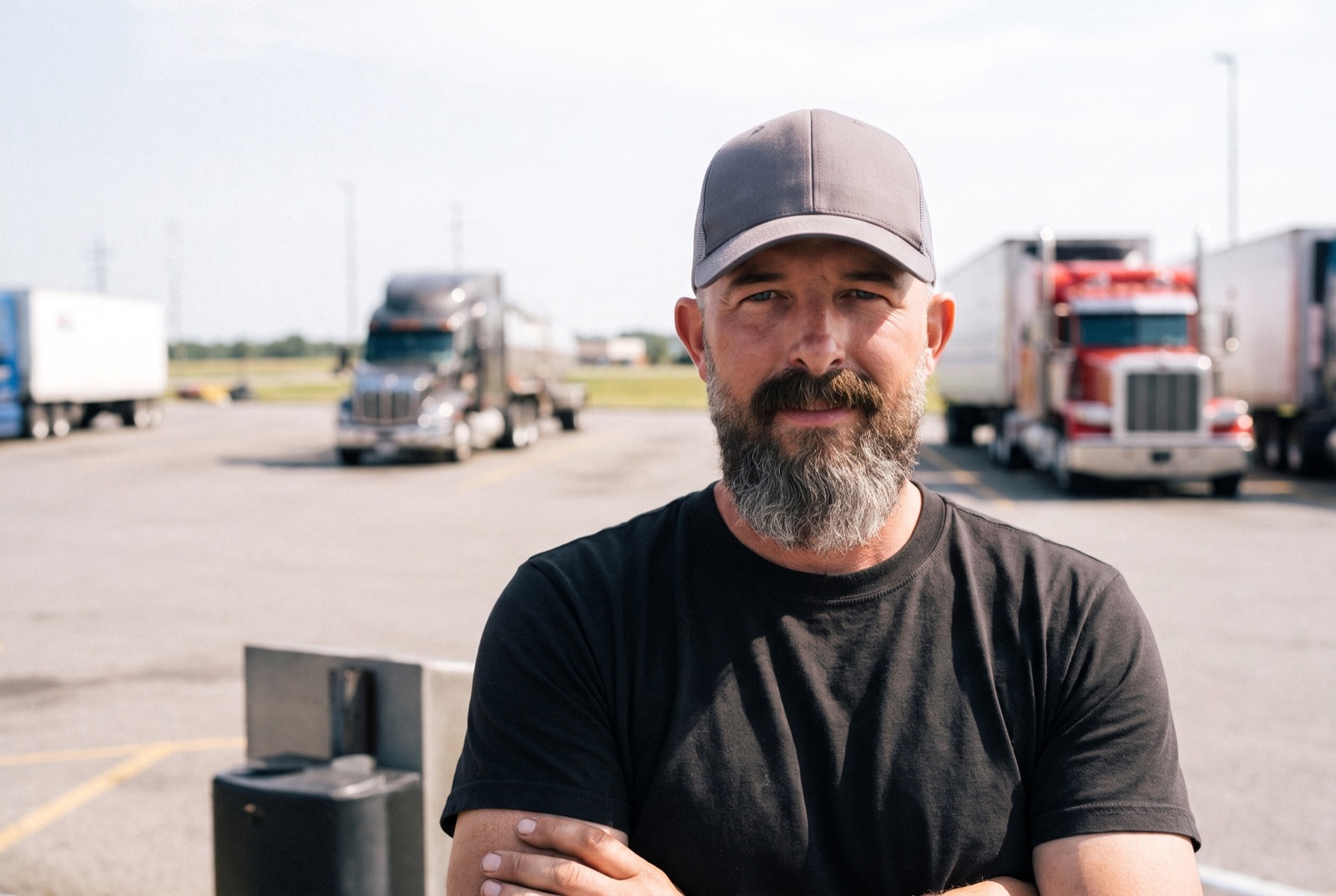
It was a Wednesday night at the Pilot in Raphine, Virginia — that big one off I-81 where everybody stops — and Wade Dillard was fueling his 2023 Peterbilt 579 when a driver he half-recognized walked over.
The guy had been seeing Wade's trucks all over the Southeast — same red Petes, same name on the door — and figured they couldn't all belong to one man. "Those yours? I keep seeing 'em out here," he said. "How many you running now?"
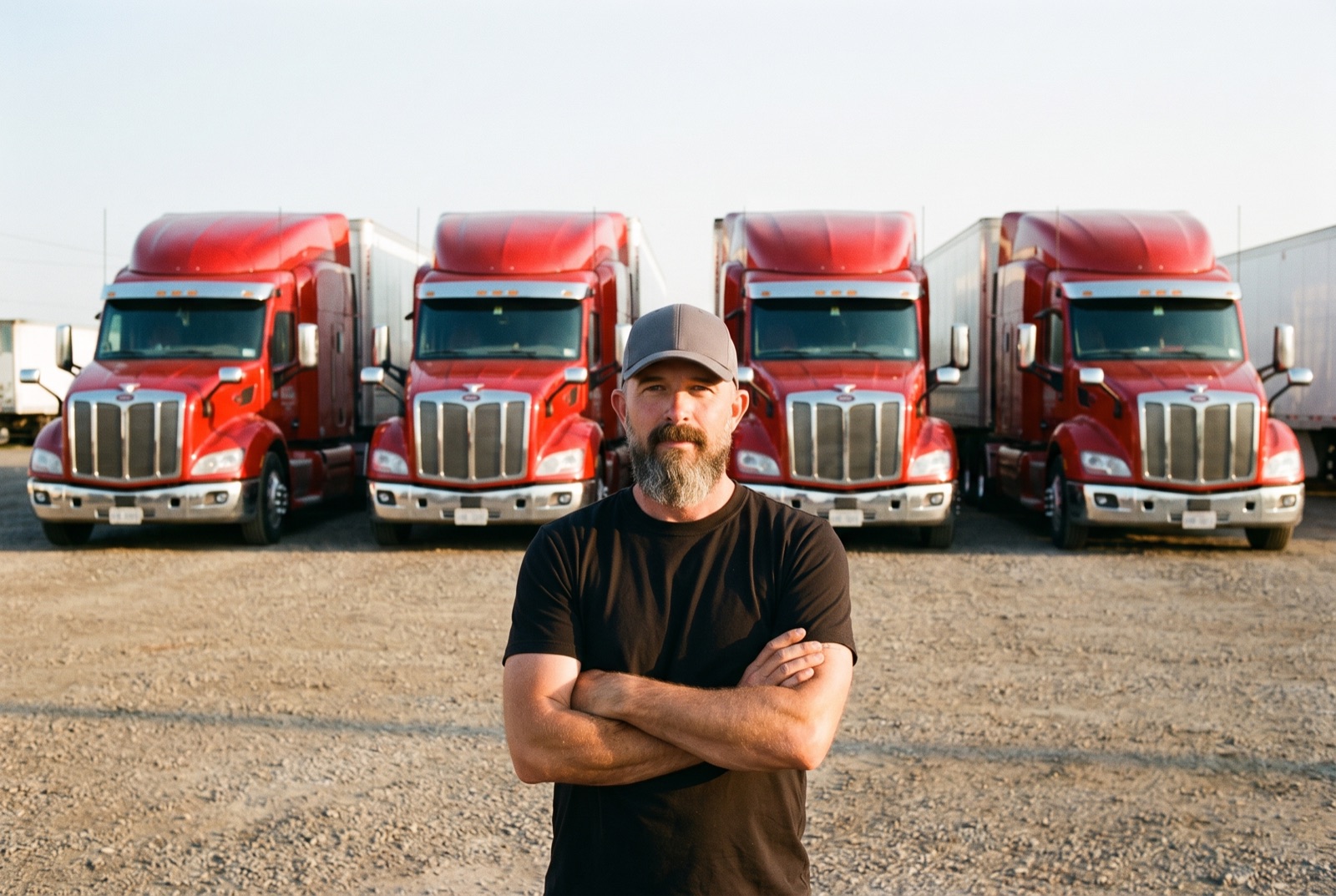
"Four," Wade said. "And I'm only driving one of 'em. The other three have my drivers in 'em, out earning while I'm asleep."
"Four trucks in what — five years?" the driver said, half-laughing. "You hit the lottery or something?"
Wade gets this question more than you'd think.
"Nah," he said. "I just stopped letting my money sit somewhere stupid — and I started making the same dollar do two jobs at once."
So he told him — the same thing he's told a dozen drivers over the past two years. And now he's telling you.
The problem nobody talks about at the fuel island
Wade has been an owner-operator for eleven years. Dry van, long-haul OTR — runs the lower 48, gone two and three weeks at a stretch. No YouTube channel, no podcast from the sleeper. What he has is a way of thinking about money most owner-operators never get shown.
Here's what he noticed about five years ago: every O/O he knew did the same thing with their cash. They'd clear eight, nine grand after expenses in a good month — and then one of three things happened to it:
1. They blew it. New chrome, new seats, a watch. Gone.
2. They sat on it. Checking account, or a savings account paying maybe 1% — barely breathing while inflation eats it.
3. They locked it in a retirement account they couldn't touch until 59½ without getting hammered on penalties.
Wade was 38. He didn't want to lock his money in a box he couldn't open for twenty years. He needed his cash to actually work — to help him grow — and still be there for his family if something happened to him on I-95 at two in the morning.
"I kept thinking, there's gotta be something where my money does something," Wade says. "Where it grows, I can get to it, and it's not just sitting there getting eaten alive." There was. He just didn't know about it yet.
A conversation in a barbershop
Wade didn't find this in a trucking magazine or on TikTok. He heard about it in a barbershop in Lumberton, North Carolina, from a guy named Reggie who sold insurance. Not truck insurance — life insurance. But not the kind his grandmother had, either. Reggie called it an IUL — Indexed Universal Life.
Wade almost tuned out. He was 38, healthy, had a cheap term policy off some website. Then Reggie said the thing that stopped him:
"What if I told you there's a life insurance policy where the cash value grows tax-advantaged, and you can borrow against it tax-free — and the money you borrow keeps working inside the policy like you never took it out?"
"That sounds too good to be true," Wade said. "It sounds that way because nobody ever explained it in plain English," Reggie said. "Sit down. Let me draw it out."
How it actually works (in trucker English)
No jargon, no Wall Street talk — just the mechanics, the way Reggie drew them out:
1. It builds cash value
Part of your premium covers the insurance; the rest goes into a cash value account tied to a market index. When the market goes up, your cash value grows — tax-advantaged, so you're not taxed on those gains every year like a brokerage account.
2. It's protected from market losses
When the market drops, your cash value doesn't go backward — there's a floor; it isn't exposed to market losses the way a regular investment account is. (The trade-off: growth has a cap, and the policy has charges that apply regardless — this isn't free money. It's a tool with costs, like anything else.)
3. You can borrow against it — tax-free
Once the cash value builds, you can take a policy loan — no bank, no credit check, no underwriter. The proceeds come to you tax-free (that's just how policy loans work under the tax code).
4. The money you borrow keeps growing
Here's the part that made Wade put his coffee down: when you take the loan, the insurer fronts you the cash and your full balance stays in the policy, still earning — as if you never touched it. So the dollars you borrowed do one job out in the world, while the same dollars keep doing another job inside the policy: growing. Your money works twice.
"No bank does this," Wade says. "No savings account, no checking, no CD. I've looked."
Wade's numbers (his numbers, not yours)
Wade wants to be clear: these are his numbers — his policy, his premium, his situation. Yours will look different, and a policy builds slower in the early years. This isn't overnight money.
With that said: five years of funding his IUL has grown his cash value to roughly $62,000. The first time he borrowed against it, he pulled about $18,000 — tax-free — for the down payment on a second truck. Not a newer ride for himself. Another truck, to put a driver in.
And here's the part that matters. That $18,000 he borrowed? It's still inside his policy, still part of his balance, still growing as if he never pulled it out — while the truck it bought is out on the road with a hired driver, hauling freight and bringing in revenue every single week. The same $18k is working in two places at once: compounding inside the policy, and rolling down the interstate as a truck that pays for itself.
Then he did it again. And again. The revenue from each new truck — run by a driver he hired — helped fund the policy faster, the cash value kept climbing, and each time he'd built enough back up he borrowed against it for the next truck and the next driver. Four trucks, three drivers, five years — all built off one policy that kept compounding the entire time. "The first truck was the hardest," Wade says. "You're patient, you're funding it, not seeing huge numbers yet. But once the trucks start paying you and the cash value's compounding underneath it? It's like compound interest on steroids — except you can actually use the money while it's compounding."
"But wait — it's still life insurance?"
Everything above sounds like a wealth strategy. And it is. But at its core it's still a life insurance policy — which means it does what life insurance is supposed to.
A tax-free death benefit. If something happens to Wade, his wife Denise and their two kids get a death benefit — tax-free, no probate, no fighting anybody. For an owner-operator with no company benefits and no corporate safety net, that matters more than most guys admit. "I've been to two driver funerals in three years," Wade says. "One guy's wife had to start a GoFundMe to bury him. He had a $180,000 truck and no life insurance. That's not happening to my family."
Living benefits if a major illness hits. If Wade is ever diagnosed with a qualifying major illness — heart attack, stroke, cancer — he can access a large portion of his death benefit while he's still alive, when the bills are piling up. "Not a GoFundMe," Wade says. "Real money."
Why most owner-operators tune this out
"It's not that nobody pitches us insurance," Wade says. "Our phones ring off the hook with it — cheap term, final expense, some guy reading off a script. So we tune it all out." And he gets it. The problem isn't a lack of pitches. It's that almost nobody sits a driver down and explains how a policy like this can work as a business tool — in plain English — instead of just selling a death benefit and moving on to the next number on the list.
"We run businesses doing $200k, $300k, $400k a year," Wade says, "and most of us have the financial setup of a college kid with a part-time job. Not because we're dumb — because nobody ever explained the part that actually matters: that the cash value is something you can put to work while you're still alive."
"I don't have extra money to put into a policy"
"I don't have extra money."
"How much are you spending on stuff that does nothing for you?" Wade asks. He was dropping $400 a month on eating out and Amazon junk. He redirected about $800/month into his premium — tight at first, but "that built $62,000 over five years, and that helped me acquire four trucks. Tell me what the Cracker Barrel did for my net worth." Start with $400, or $300 — the point is to start, because the compounding time doesn't come back.
"I'm healthy, I don't need life insurance."
"That's what makes you the perfect candidate — you qualify NOW. Try getting approved after a diagnosis. Try getting decent rates at 55 with high blood pressure and a bad knee." The window doesn't stay open forever.
"This sounds complicated."
"It's not complicated. It's unfamiliar — there's a difference. You get on a call, they explain your numbers, you ask questions, you decide. I'm not asking you to get a finance degree. I'm asking you to spend 20 minutes on something that could change how your money works for the rest of your career."
See your numbers
Wade can tell you what his policy did for him — but your numbers will be different: your age, your health, your premium, your timeline. The only way to know what an IUL could do for your operation is to run it with a licensed agent who actually understands trucking.
American Truckers Advantage connects owner-operators with licensed agents who specialize in IUL for self-employed drivers. They'll walk you through a quote on your specific situation — cash value growth, borrowing capacity, death benefit, and living benefits over 5, 10, 15 years. Free. A few minutes. Nobody twists your arm.
Every month you wait is a month of tax-advantaged growth you don't get back — the compounding works because of time, and every year you get older the cost of coverage climbs a little. "The best time to start was a few years ago," Wade says. "The second-best time is today — whatever age you are, reading this in a truck-stop parking lot." A year from now, you'll wish you'd started today instead of next year.
See your numbers — free, no obligation
See My Numbers →🔒 Private · No obligation · A real licensed agent, not a robot · You decide if it makes sense
Your money is either working for you or it's not. Wade figured out how to make it work — twice.