Why a Falling Pump Price Doesn't Always Mean a Fatter Settlement
Diesel is dropping fast, but your fuel surcharge may be falling right alongside it. Here's how the FSC actually works — and where the money quietly leaks out.
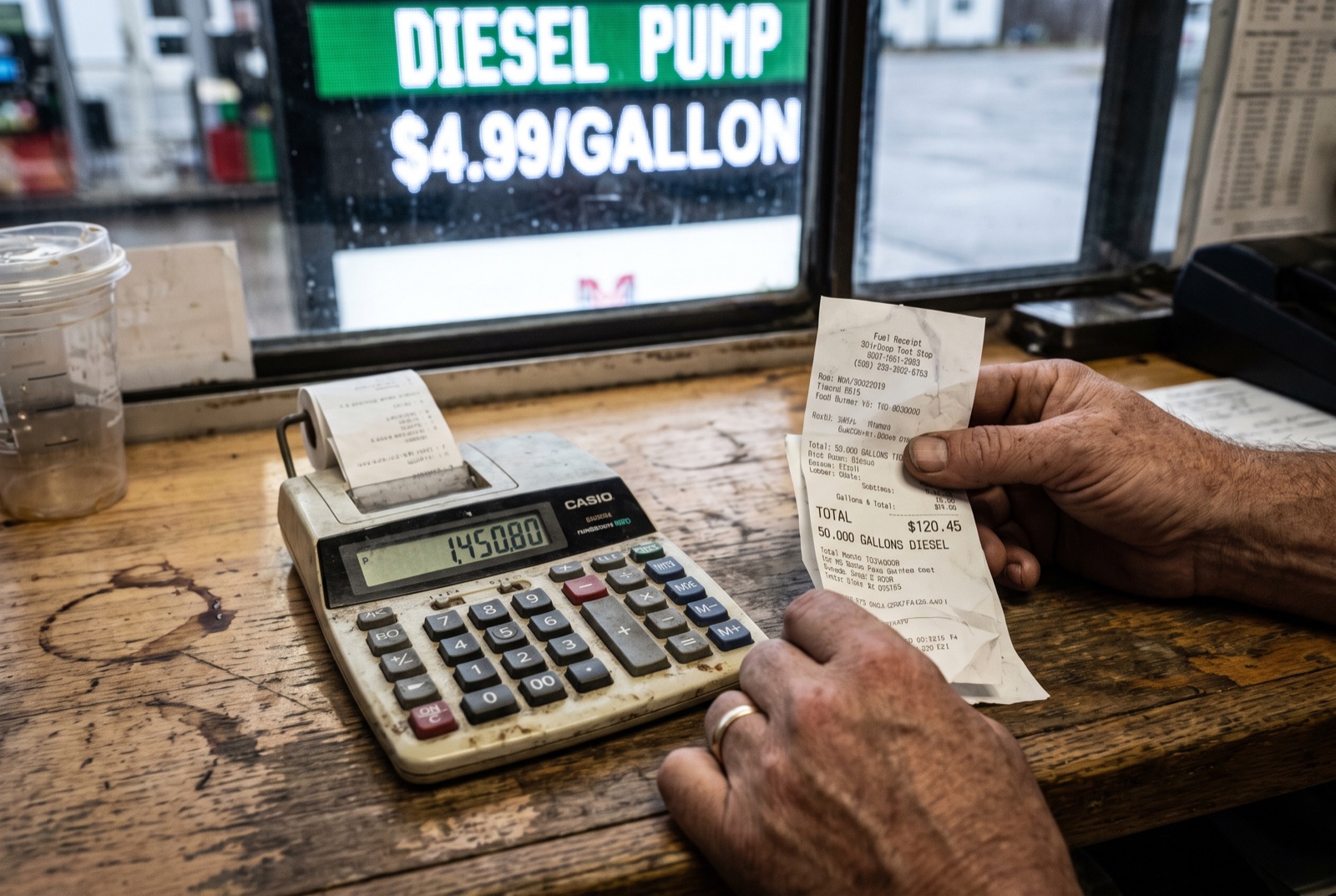
Diesel is down nearly 81 cents in seven weeks, so your settlement should be getting fatter, right? Not necessarily. The fuel surcharge — the mechanism that's supposed to shield you from fuel swings — cuts both ways, and in a falling market it can work against you.
How the FSC actually works
Most fuel surcharges are pegged to the U.S. EIA weekly national (or regional) average diesel price. The formula sets a "base" price (often somewhere around $1.20–$1.25/gal historically) and pays a few cents per mile for every nickel diesel runs above that base. When the published average drops, your surcharge revenue drops with it — automatically.
Two structural problems for the small carrier:
- It lags. The FSC uses last week's posted average, not what you actually paid at the pump today. In a fast-moving market, you can be earning a surcharge built on a higher price while fuel falls — or the reverse on the way up.
- The peg may not be yours. A surcharge calibrated to a national average and an assumed 6.0–6.5 mpg doesn't care that your truck, your lane, or your idle time tells a different story.
What it means for your truck
- Track FSC as its own line. Know what you're being paid per mile in surcharge versus what fuel actually cost you that week.
- Ask how the surcharge is calculated before you take committed freight — base peg, index, and mpg assumption all matter.
- Don't confuse a lower pump price with a better week. If your FSC fell faster than your fuel spend, your net got worse, not better.
Falling diesel is good news overall. Just don't assume the relief lands in your account automatically — in trucking, the money is in the details of the formula.