My cargo's insured. My trailer's insured. I wasn't.
Every owner-operator insures the truck, the trailer, the cargo — everything but himself. This is how I finally built the one thing my business never came with: a benefits package that protects my family if I'm gone, and builds cash I can actually use while I'm still here. It's the conversation I dodged for 14 years.
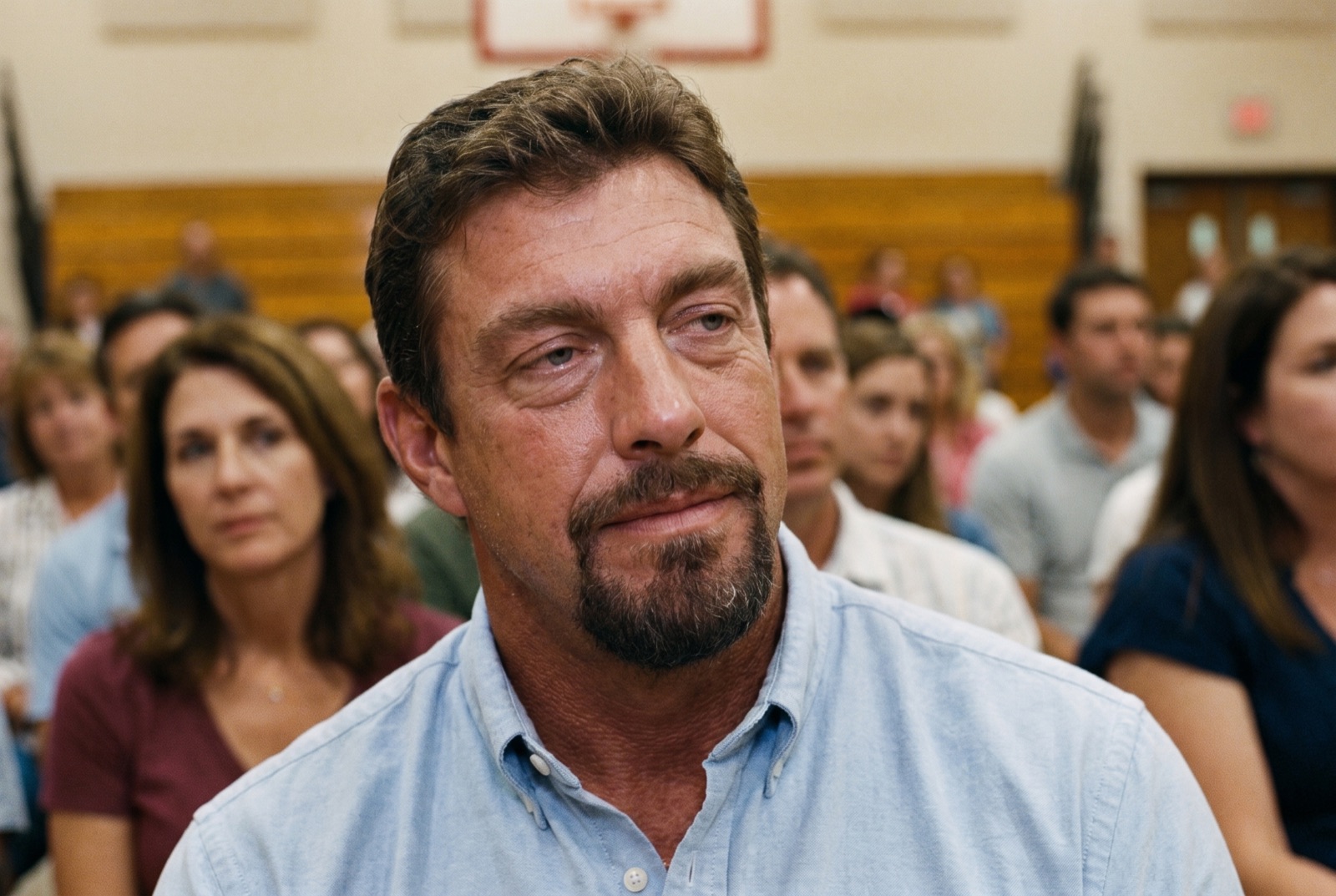
There's a photo of me at my daughter's eighth-grade graduation that I can't stand looking at.
Not because of the occasion. Because of my face. I'm smiling, sure. But I'd been up since 2:40 a.m. running numbers in my bunk outside a Pilot in Texarkana the night before, and you can see it. The skin under my eyes looks like creased leather. My dress shirt doesn't fit right because I'd dropped eleven pounds that month from stress I hadn't told anyone about.
What I was doing at 2:40 a.m. wasn't load planning.
I was on my phone calculator trying to figure out what Danielle and the kids would actually have if a blown steer tire put me into a guardrail on I-30.
The answer made me sick.
The math I kept running at 3 a.m. — and why it never added up
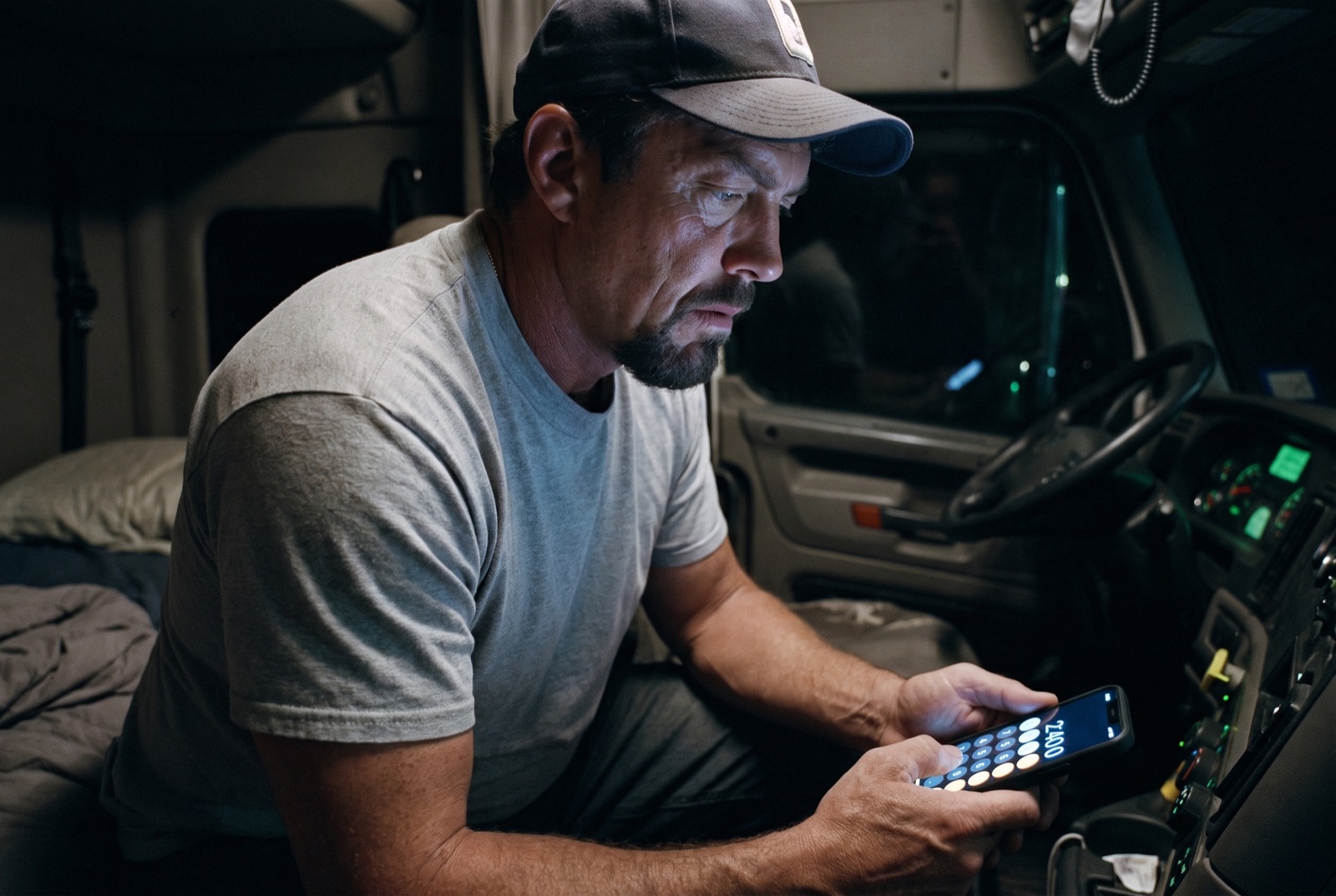
Here's what I had at the time:
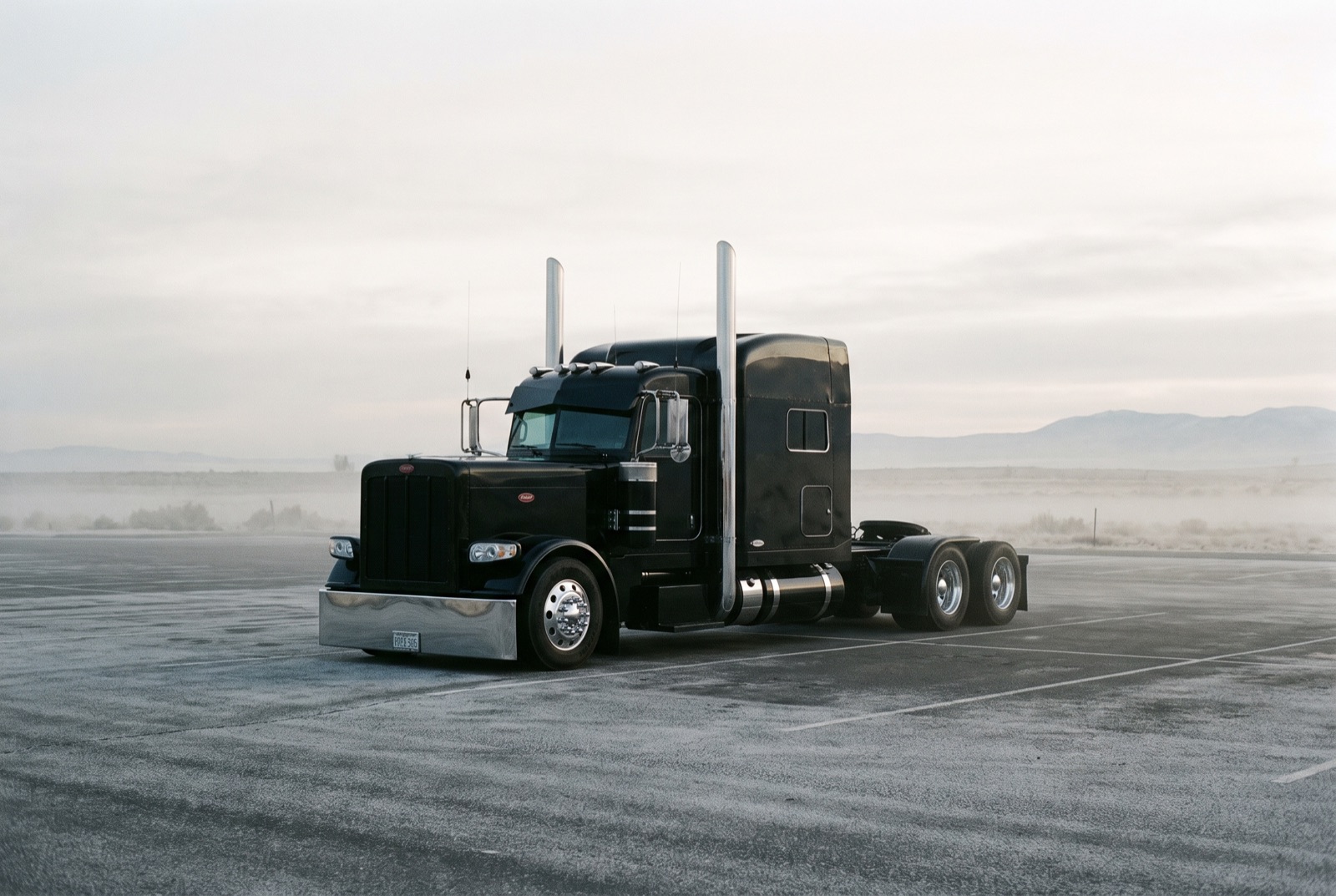
A 2021 Peterbilt 389 I was still paying off — about $2,200 a month. If I sold it and paid off what I still owed the bank, I'd maybe walk away with $43,000 — and only if the used-truck market held. A checking account that bounced between $7,000 and $19,000 depending on the week. And about $31,000 in a retirement account I'd opened a few years back and mostly forgotten about.
No life insurance. None. I'd had a small term policy through my old W-2 carrier gig, but that vanished the day I went independent. I kept meaning to get something. You know how that goes.
So I'm lying in that bunk doing the math.
Danielle would get the truck. Which she can't drive. And here's the part I hadn't let myself think about: that note doesn't die with me. It's secured debt — the truck is the collateral. So either she keeps writing a $2,200 check every month on a rig that isn't turning a wheel, or the bank takes it back. Her only real move is to sell it. Fast. Under pressure. And every dealer in a 300-mile radius would smell that. After the note's paid off, she'd clear maybe $18,000 to $22,000.
The checking account. The retirement account. That's it.
My business doesn't have employees. It doesn't have transferable contracts. It has no value without me in the driver's seat. The moment my CDL medical card becomes irrelevant, the whole thing folds like a card table.
I built a six-figure operation from nothing. And my family's safety net was a used Peterbilt and a checking account that couldn't cover six months of mortgage.
That's not a plan. That's a disaster waiting for a date.
And maybe your setup's different than mine. Doesn't matter. If your truck's paid off, it's a depreciating asset she has to dump at a fire-sale price while the bills keep coming. If you're financing like I was, she inherits the note — not a windfall — and if you're upside down on it or she co-signed, she inherits a problem. If you're leased or in a lease-purchase, she may walk away with nothing but the headache of unwinding it. Owned, financed, or leased, it all lands in the same place: that truck is not a plan for your family.
Nobody in trucking talks about this. I think I know why.
We talk about everything else. Fuel prices. Broker rates. ELD workarounds. Which shops are honest and which ones will quote you $6,400 for a DPF regen that should cost $2,800. We argue Cummins versus PACCAR in Facebook groups at midnight like it's life or death.
But bring up what happens to your family if you don't come home — or a heart attack or stroke takes you off the road for good?
Silence.
I think it's because the answer is terrifying and we don't know what to do about it. So we just don't think about it. I didn't. For fourteen years. And I'm not the only one — you see the same quiet confession on the forums every week:
"I've got insurance on the truck, the trailer, the cargo. The only thing in my whole operation that ain't covered is me. Been meaning to fix that for like six years."
"Buddy dropped dead at 51. Wife sold his truck for half what it was worth to some dealer who knew she was desperate. They needed him. After that they needed income. A truck ain't income."
Here's the thing nobody wants to say out loud: an owner-operator is a one-man business built entirely on one man's body. Your back. Your shoulders. Your eyes. Your heart. Your blood pressure you maybe haven't checked since your last DOT physical.
If that body stops working — dead, or just broken enough that you can't pass a physical — the revenue stops the same day. Not the same month. The same day.
And unlike a W-2 driver at Werner or Schneider, nobody's sending your wife a pension. Nobody's covering COBRA. Nobody's handing her severance. There is no benefits department.
You are the benefits department. And if you're anything like I was, that department's been closed for years.
Then my buddy Carlos said something I couldn't unhear
That's exactly where I'd been sitting for fourteen years — until one morning, over bad eggs and worse coffee, a buddy of mine flipped the whole thing on its head.
I almost don't want to tell this part, because it sounds like a setup — like I'm about to pitch you something. And I am, eventually. But not yet. This part is just what happened.
Carlos runs a 2019 Cascadia, mostly Texas to Florida. Known him since orientation at a carrier I won't name — he went independent about two years before I did. We'd grab breakfast whenever we ended up at the same stop. One of those friendships that runs on burnt coffee and bitching about freight rates.
So we're sitting at the TA on I-30 — the one with the halfway-decent eggs — and I don't even remember how it came up. I think I just looked as tired as I felt.
He said: "You got your stuff set up yet?"
"What stuff?"
"Your protection. For Danielle and the kids."
I told him I had the retirement account. He almost choked on his coffee. "Brother, I'm not talking about retirement. I'm talking about if some four-wheeler puts you in a ditch tomorrow. Or some doctor sits you down and says the word cancer. What does Danielle get?"
I didn't answer. He knew.
Then he told me about something he'd set up a year earlier — not through a carrier, not some trucker-association group plan. Through an advisor who actually understood owner-operators. Understood 1099 income. Understood the seasonality. Understood that our "benefits package" is whatever we build ourselves.
And my first thought — I'll be honest — was: this sounds like one of those insurance scams they pitch at truck shows between the chrome accessories and the CBD gummies.
My first reaction was to blow it off. Here's why I didn't.
Carlos isn't a sucker. The man negotiates rates like a divorce attorney. He doesn't spend a dollar on anything he hasn't pulled apart and looked at every piece of.
So when he told me he'd been putting money into this thing for a year and was genuinely calm about it — not excited, not salesy, just calm — I paid attention.
"It does four things," he said. "That's it. And they're the four things we don't have." I asked him to break it down like I was five. Because when it comes to financial products, I basically am.
So what does it actually do? Four things.
What Carlos had set up was an Indexed Universal Life policy. I know. The name sounds like something a guy in a bad suit sells you at a seminar in an airport hotel. Stick with me. Here's what it actually is, the way he explained it over eggs and burnt coffee:
1. Real life insurance
If I die, Danielle gets a tax-free death benefit. Not the truck. Not whatever's in checking that week. A real check, with a real number, that she can put toward the mortgage, the kids' school, whatever she needs. The alternative — the thing I'd lived with for fourteen years — was nothing.
2. Living benefits if the big one hits
Here's what most guys don't know a permanent policy can do: if you're diagnosed with a qualifying serious illness — a heart attack, stroke, or cancer — or a major accident leaves you unable to care for yourself, riders on these policies can let you access a large portion of your benefit while you're still alive. So if the thing that takes you off the road is the big one, there's money to keep the mortgage paid and the family afloat while you deal with it — not just a check after you're gone. (Rider availability and triggers vary by carrier and state.)
3. Cash value that grows tax-advantaged
Part of what you put in goes into a cash value account tied to a market index — but with a floor. When the market goes up, your cash value grows. When the market drops, you don't lose money to the market — there's floor protection underneath you. It grows tax-advantaged. Not a taxable brokerage account. Not a savings account earning 0.4%.
4. Cash you can actually touch
The cash value isn't locked up until you're 65. You can access it tax-free, anytime, for anything — a down payment on a newer rig, a slow freight month, an emergency, your kid's college. No penalties. No begging a 401(k) administrator to borrow your own money.
Let me put this together, because this is the part that hit me. As an owner-operator I had no life insurance, no protection if I got seriously sick or hurt, no real savings vehicle, and no accessible cash reserve. This one thing gave me all four.
It's not a retirement account. It's not just life insurance. Put those four together, and that's the benefits package my business never came with. Every W-2 driver at every mega-carrier has one — life, disability, a 401(k) match — and never thinks about it because it's just there. We gave all that up when we went independent. We got the freedom and the upside. Most of us never replaced the safety net. This replaces the safety net.
The part that actually broke my brain
I set mine up not long after that breakfast with Carlos. A few years in now — I've been quietly putting in $150 a week, about the price of a couple bad truck-stop dinners and a tank of DEF.
And today I've got around $56,000 I can get to — tax-free, anytime I want.
Here's the part I made Carlos explain three times, because I didn't believe him. I can pull from that $56k whenever I need it. For anything. A surprise engine job. A down payment on a newer rig. One of those brutal slow-freight months where the house payment doesn't care that loads dried up.
No bank application. No "let me run your credit real quick." No 401(k) administrator telling me I can't touch my own money until I'm 59½. It's mine. I reach for it. I get it.
And here's the part that floored me: when I pull from it, the money can keep growing as if I never touched it.
Let that sink in. I'm using the cash — and it's still in there, still working. Same dollar. Two jobs at once.
Carlos called it "non-direct recognition." I called it the thing nobody ever told me existed. No savings account does this. No CD does this. No 401(k) lets you pull cash on a Tuesday afternoon — zero questions asked — and keep compounding like nothing happened.
That's the moment it clicked: this wasn't just life insurance. It was the first financial tool I'd ever seen that actually worked the way I always thought money was supposed to. You put it in, it grows tax-advantaged, and when life hits — and it always hits when you run a truck — you can reach your cash without blowing up the plan.
Quick thing worth knowing: you reach the cash through policy loans and withdrawals — they can reduce your death benefit until you pay them back, and a policy builds slower in the early years than it does later on. My $56k is just my number, from my situation and what I put in. Yours will look different — but the mechanism works the same for everyone.
How it stacks up — the honest version
What a company driver actually gets, what owning the truck gets you, and what your own benefit package gives you:
| Company Driver | Just the Truck | Your Benefit Package (IUL) | |
|---|---|---|---|
| Life insurance for your family | ✓ but only ~$25–50k | ✗ | ✓ Sized to your family |
| Pays out if a major illness hits (heart attack, stroke, cancer) | ✗ | ✗ | ✓ |
| A tax-advantaged way to build savings | ✓ 401(k) | ✗ | ✓ |
| Reach that money before 59½ without a penalty | ✗ locked | Sell the truck | ✓ Tax-free, anytime |
| Stays yours if you change carriers or sell the truck | ✗ ends if you leave | ✗ | ✓ |
What the other guys are saying — and I asked around
After I talked to Carlos, I did what any owner-operator does. I asked around. Quietly — because I didn't want to look like I was selling something, or like I didn't have my finances together. Turns out a lot of guys had the same gap. And a few had already filled it.
"I had a term policy — $250,000, $180 a month. You know what I get at the end of that term? Nothing. The money's gone. With this, the cash value is mine. I can use it. That's the difference nobody explains."
Verified Owner-Operator Ray, 47 · Jacksonville, FL · Kenworth W900L, flatbed
"My wife sat me down after my DOT physical last year. My blood pressure was high. She said, 'What happens to us if something happens to you out there?' I didn't have an answer. Now I do. That's all I needed."
Verified Owner-Operator Tommy, 52 · Chicago–Atlanta corridor · dry van, 23 yrs in
"I was putting $800 a month into a retirement account and feeling good about it. Then I learned I couldn't touch that money till I was 59½ without a penalty — and if I died tomorrow, my wife gets the account minus taxes. With this, she gets the death benefit tax-free AND I can pull from the cash value when I need it. It's not even close."
Verified Owner-Operator DeAndre, 41 · South Florida · reefer, produce
So what's it actually cost?
Fair question — and here's the honest answer: there's no sticker price. I know that sounds like a dodge. It's not. It's actually the best part.
This isn't a one-size policy with a number stapled to the front. You build it around you — three dials:
1. How much protection you want
What you want your family to walk away with if you don't come home. More coverage, higher premium — your call.
2. How much cash value you want to build
How fast you stack up the cash you can pull from later. Want to build it quicker? You put more in.
3. What you can actually afford to put in
On a freight schedule that's never the same two months running, this is the part that matters: you can put more in when it's good and ease off when it's slow. The policy bends with your income instead of fighting it.
Mine's $150 a week. Some guys do less. Some do a lot more. There's no "right" number — there's your number.
So nobody hands you a price off a shelf. A licensed agent runs your numbers — your age, your health, what you want it to do — and shows you exactly what it'd cost and exactly what you'd get, before you commit to a single thing. That's the whole reason the call's free: you find out what it looks like for you. Then you decide.
The objections I had — because you're having them right now
I know what you're thinking, because I thought all of it.
"I can't afford another monthly payment."
I said that too — truck note, insurance, fuel, maintenance, phone, ELD, permits, IFTA, the accountant. But I was already spending money on things that protect my family exactly zero: $210 a month on satellite radio, a gym I used twice, and a storage unit full of stuff I forgot I owned. The policy costs less than my truck insurance — and my truck insurance doesn't pay Danielle a dime if I die. The premium is also flexible: put more in on a good month, scale back on a slow one. It's built for variable income. Which is every owner-operator alive.
"I don't trust insurance companies."
Fair. I don't trust most of them either. But these aren't fly-by-night outfits — they're carriers that have been paying claims since before the interstate system existed, independently rated, regulated by state insurance departments. The protections are spelled out in your contract, in writing, before you sign anything.
"I'm healthy. I don't need this yet."
That's exactly when you should get it. Rates are based on your health at the time you apply. Every year you wait, it costs more — and if something shows up on your next DOT physical (blood pressure, A1C, sleep apnea), your options shrink fast. The best time to buy a fire extinguisher is before the fire.
"My wife and I will figure it out later."
Brother. I said this for fourteen years. "Later" is the most expensive word in the English language. Later means higher premiums, possible health issues that limit your options, one more year your family has zero protection. Later is what I was doing at 2:40 a.m. in that bunk in Texarkana. Don't be me.
"This sounds too complicated."
It's not. It's four things: death benefit, living benefits if a major illness hits, tax-advantaged cash growth, and accessible cash. If you can read a rate confirmation, you can understand this.
Who this is actually for:
- Owner-operators roughly 39–54, running your own authority, filing 1099
- You've built something real — but haven't built the safety net underneath it yet
- If you're honest, your family's plan if something happens to you is basically "sell the truck and hope"
Who it's not for:
- Guys genuinely set with a term policy and a retirement account they're happy with — if you've got it handled, you've got it handled
- Anyone looking for a get-rich-quick scheme. This isn't crypto or a side hustle. It's a tool that does four specific things, well.
What happens if you actually want to see your numbers
This is the part where I'm supposed to pressure you. I'm not going to.
Here's what I'll say: the thing that changed everything for me wasn't buying the policy. It was seeing my numbers. Once I saw what Danielle would actually receive, and what the cash value would look like down the road, the decision made itself.
- Tap the button and fill out a short form on American Truckers Advantage's page — name, age, general health, what you're thinking about setting aside monthly. About two minutes.
- American Truckers Advantage matches you with a licensed agent who actually works with owner-operators — not a call-center kid reading a script — and they put together your real numbers for your real situation.
- You review them — on a call or on your own first. No countdown timer. No "limited-time offer." If it makes sense, you move forward. If it doesn't, you don't. Nobody chases you. This isn't a timeshare presentation.
See your numbers — free, no obligation
Answer a few quick questions and American Truckers Advantage will connect you with a licensed agent who works with owner-operators. They'll show you what your benefit package would look like — what it covers, what it costs, what your family gets. No pressure.
See My Numbers →🔒 Private · No credit card · A real licensed agent, not a robot · You decide if it makes sense
You insure the truck, the cargo, and the liability. The only thing in your business that isn't covered is you.
Marcus Delaine is an owner-operator running under his own authority out of the Dallas–Fort Worth area. He's been in trucking 19 years, 14 of them independent. He is not a financial advisor — he's a guy who drives a truck and figured this out later than he should have.